By the end of 2027, every system in your supply chain needs to read a new kind of barcode.
And while some organizations have started to prepare, most aren’t ready yet.
GS1 Sunrise 2027 is a global initiative moving the industry from traditional 1D barcodes (UPC/EAN) to 2D formats like QR codes and DataMatrix barcodes. Unlike the barcodes you’re using today, 2D barcodes carry rich product data including lot numbers, expiration dates, serial numbers, origin, and more — all in a single scan, readable anywhere in the supply chain.
The goal is full visibility and traceability from factory floor to point of sale. But getting there requires more than new labels. Your scanners, software, and data systems all need to be ready as well.
Here’s what that means for your organization as well as how to prepare.

GS1 is the global standards body behind the barcodes, identifiers, and data structures that keep supply chains moving.
More than 2 million companies rely on GS1 product identification standards to power over 10 billion transactions every day. It’s the shared language that lets a product scanned in a warehouse mean exactly the same thing at a retail checkout or hospital receiving dock.
Jump to section
GS1 compliance standards govern four core areas of supply chain identity: product identification (GTIN), location codes (GLN), shipment tracking (SSCC), and the barcode formats — UPC, EAN, QR, and DataMatrix — used to carry that data. GS1 US applies these global standards in the United States, helping companies implement them correctly across retail, healthcare, manufacturing, and foodservice.
Sunrise 2027 is GS1’s most significant innovation in decades.
Understanding what’s driving the initiative helps explain why.
What’s Changing: From 1D to 2D Barcodes
There’s been interest in modernizing barcodes for years.
That’s because traditional one-dimensional barcodes are linear codes, like UPC or EAN codes, used to scan items at the point of sale. They can identify a product, manufacturer, and price at checkout or track shipments but are otherwise limited in the amount of data they can hold.
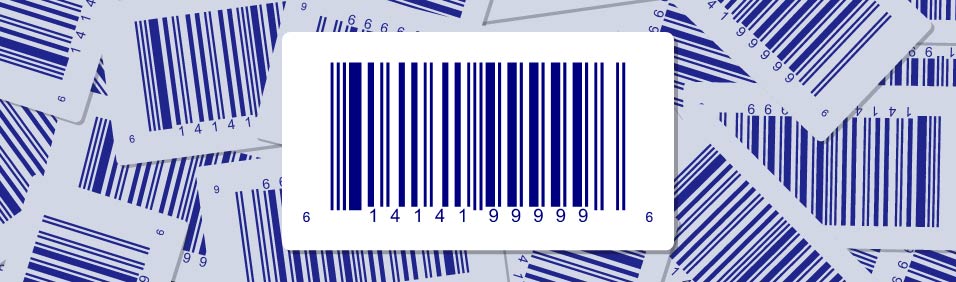
That’s not enough to satisfy growing regulatory, supply chain traceability and transparency demands across industries like retail, healthcare, and food — let alone withstand the pressures of increasing automation and digital transformation.
2D barcodes, on the other hand, are built along an X-Y axis. They can be read in any direction using image capture technology. You’re likely familiar with DataMatrix barcodes and QR codes in supply chain.

The additional data contained in 2D barcodes allows for greater traceability and accuracy, enables end-to-end tracking, and supports more specific recalls, regulatory compliance, sustainability, and automation.
So what does all this rich data mean in everyday terms?
Why Sunrise 2027 Matters
The benefits of 2D barcodes are impressive.
For operations leaders, lot numbers and expiration dates encoded at the source means no more manual data entry, fewer receiving errors, and FEFO (first expired, first out) picking that actually works.
For recalls, companies will no longer have to pull an entire SKU because there’s no lot-level visibility at the point of sale. Instead, you can target the exact batch affected with far less cost and disruption.
For customers, a quick scan can show ingredients, allergens, sustainability credentials, and recall status in real time. They can immediately tell if a product is recyclable, cruelty-free, and even whether coupons are available.
For the supply chain, Sunrise 2027 builds the data infrastructure that enables automation and reduces friction between trading partners. And for regulated industries like food, pharma, and healthcare, it aligns neatly with traceability mandates, drug serialization, and UDI (unique device identification) requirements that are already incoming.
The amount of information available at a scan will be groundbreaking. According to GS1, it will enable “different functionalities and data capacities that can make significant differences in efficient workflow.”
System Implications of the New Labeling Requirements
GS1 compliance may require upgrades, especially if your organization is running older legacy systems.
Scanners, cameras, and POS systems will need to reliably read 2D barcodes in addition to traditional 1D codes (including during the transition.)
Backend systems (ERP, WMS, MES, POS) must be able to capture and process multi-attribute data — such as GTIN, lot, serial, and expiration — rather than a single product ID.
Data models, APIs, and integrations may need to be upgraded so information flows end-to-end across systems.
Companies must support GS1 standards like Application Identifiers and Digital Link to ensure interoperability with partners.
Finally, stronger data governance and validation processes become critical, since errors in barcode data will propagate across the entire supply chain.
Who Will Be Impacted?
Any organization labeling physical products will need to make the transition. Here’s how various industries will be affected.

Manufacturers
> The investment: Packaging and labeling processes will need to be upgraded. Printing systems and line automation will integrate with ERP/MES to generate and manage dynamic data in real time. Increased data accuracy will become critical because errors in labeling or data will propagate across the supply chain instantly.
> The payoff: Manufacturers will see far better supply chain traceability, faster and more targeted product recalls, and improved quality control across production.

Healthcare & Life Sciences
> The investment: Upgrades to scanning systems, EHR/pharmacy integration, and data management systems will all be required.
> The payoff: Patient safety will improve with the right drug delivered to the right patient at the right time. Compliance with drug serialization and UDI regulations will be stronger. Recalls will be faster and more precise and there will be fewer counterfeit risks.
Warehousing & Logistics
> The investment: Upgraded scanners, WMS capabilities, and data handling will be needed to process richer data.
> The payoff: Visibility will extend to lot- and unit-level. Receiving accuracy will improve, as will support for FEFO picking. More precise inventory control and traceability will be possible across the network. Operations will be more automated, accurate, and resilient with faster recalls and fewer errors.

Retail & Distribution
> The investment: POS systems and scanners will need upgraded and backend data systems that handle enhanced data more effectively will be required.
> The payoff: Move beyond simple price lookups with expiration lot and product details at point of sale and DC. Improved inventory accuracy, reduced shrink, and targeted recalls instead of pulling entire SKUs. Distributors will gain visibility into product flow and condition, improving replenishment and supplier coordination.
Timeline for The 2027 Barcode Transition
Sunrise 2027 isn’t just about labeling requirements, it’s about data maturity and modernizing your data foundations.
And companies have already begun preparing, with traceability and recalls as the biggest drivers.
- Pilots are live across retail and CPG
- Dual barcodes (UPC + 2D) are becoming standard
- POS systems are catching up, but not uniformly
Among those who haven’t started, data readiness is the biggest roadblock.
If that describes you, the next best time to start is now.
Step one is to conduct a label audit to identify where barcodes exist, what data they contain, and whether there’s consistency to support 2D codes. Look for gaps like missing lot or expiration data, inconsistent formats, or manual labeling processes that won’t scale.
Next, assess printer and scanner readiness. Ensure your equipment can reliably produce and read 2D bar codes under real-world conditions. Many legacy devices say they support 2D but fail at speed, quality, or durability.
Finally (and this will probably be your biggest lift), look at software and data management. Your systems will have to evolve from handling a single product ID to managing both product and attributes across ERP, WMS, MES, and POS systems. This means updating data models, integrations, and implementing strict data governments to prevent errors from spreading across the supply chain. Work closely with labeling experts, suppliers, and training partners to align barcode formats, data standards, and transition timelines. One weak link can break the process, so be sure barcodes work across your entire ecosystem.
Take a phased approach. Plan to do controlled pilots on select SKUs or facilities and then scale across your operations. Early testing will help to validate both scanning performance and end-to-end data flow before a broader rollout. Ultimately, successful preparation depends on building the systems and processes to support richer, more accurate data.
The Case for Moving Now
The risks of waiting are real and costly:
- Falling behind competitors who are already testing and learning
- Retail non-compliance, being out of sync with your trading partners
- Operational disruption in the form of last-minute packaging chaos
- Delayed ROI on real-time traceability, smarter recalls, and better inventory visibility
- Higher implementation costs (rush implementations are always more risky and expensive)
- Falling behind competitors who are already testing and learning
Don’t Let GS1 Sunrise 2027 Catch You Off Guard
Sunrise 2027 will be here before you know it.
The organizations that will navigate it most smoothly are already auditing their labels, testing their scanners, and aligning their data systems — understanding that supply chain transitions take time to do right.
Fortunately, you don’t have to figure this out alone.
At Electronic Imaging Materials, we’ve spent decades helping organizations get labeling right and we’re already helping customers prepare. Whether you’re just getting started or already mid-transition, we can help you move forward with confidence.
> Ready to take stock of where you stand? Start with a label audit — and reach out if you need a knowledgeable partner in your corner.