Pick the wrong museum label, and you could damage the very item you’re trying to protect. To an outsider, choosing a small adhesive tag might seem simple. However, professional archivists, librarians, and collection caretakers know that labels must be safe, stable, and appropriate for long-term preservation.

Purpose of Museum Labels
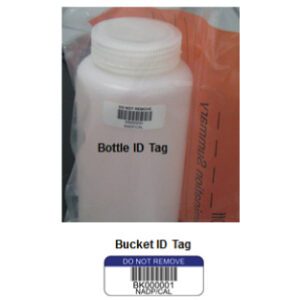
Museum identification labels create a connection between an object and its data. In general, archival labels serve one of two functions:
- Science and Research: These labels provide essential information about an item’s provenance (that is, where it was collected from), its chain of custody/ownership, and other relevant facts. For example, a natural history specimen label might record everything from the species name to the collector’s identity.
- Public Exhibition: Public-facing museum labels are designed to inform. They provide basic facts about an object along with specifics ranging from its background to its significance. For example, a painting label may communicate details about the artist, the year of its creation, and the materials used.
The physical appearance of labels designed for academic and research use and those for a general audience are distinct; however, they share some commonalities. Most notably, they must allow the object they are attached to be identified, provide key information, and remain securely attached with damaging the object itself.
Museum Label Challenges and Considerations
It’s common for labels to contain acid. Standard paper products contain a small amount of natural acid. Traditional paper products also contain lignin—it’s what gives plants rigidity—which becomes acidic as it breaks down. The acid found in standard labels poses a variety of challenges, including:
- Yellows and brittles paper
- Leaches minerals from bone, causing fragility
- Weakens or dissolves rocks and minerals depending on composition
Acid-Free
Using acid-free labels is essential to long-term preservation for everyone from archivists to zoologists. Unlike their conventional counterparts, acid-free labels use facestocks with a neutral pH of 7 or higher on the pH scale. Acid-free labels also feature pH-neutral adhesives and don’t contain potentially damaging chemicals.
Acid-Free, Lignin-Free
One thing to know about acid-free labels is that they’re only required to be acid-free at the time of manufacturing; more simply, they can contain lignin and become acidic later, as the lignin breaks down.
As their name suggests, acid-free, lignin-free labels contain neither acid nor the potential to produce acid through lignin breakdown. This makes them an ideal choice for archival applications—ensuring labels remain legible and attached, while not damaging important items over long-term preservation.
EIM is a top supplier of acid-free paper and adhesives suitable for museum identification labels.
What to Look for In an Archival Label
Acid-free, lignin-free labels are a good starting point when selecting museum labels. However, depending on your application, there are some other qualities you might also want to consider.
Photographic Activity Test (P.A.T.)
Those stewarding photographs, negatives, and slides—including archivists, collection managers, and librarians—should seek out labels that are Photographic Activity Test (P.A.T.) certified. P.A.T. is an internationally recognized standard (ISO 18916), which assesses the potential to damage photographs over time.
By choosing a P.A.T.-certified label, you’re ensuring the long-term preservation of your photographic materials.
UV-Resistant
Most museum environments are designed to minimize UV exposure; however, some archival label applications are exposed to the sun’s damaging rays or harmful artificial lighting. In these cases, a UV-resistant label is vital for safe, enduring identification.
Chemical-Resistant
Chemicals are pervasive in many archival applications. Consider that many museum specimen labels are exposed to fluids such as ethanol and formalin for their preservation and storage. Beyond wet collections, fields such as geology and mineralogy rely on chemicals to clean and restore samples.
Chemical-resistant archival labels are an important consideration in applications where objects are stored, handled, or treated in environments with the risk of chemical exposure.
Tear-Resistant
Tear resistance is an important quality to look for in teaching collections frequently handled by researchers, teachers, and students. It can also be a valuable feature to look for when using small, potentially fragile labels, such as those used with pinned insect collections.
Because museum identification labels need to stand the test of time, tear resistance is an appealing element—no matter the application.
Getting Archival Labeling Right
Generally, you get one chance to get your museum labels right. The wrong label choice can cause irreparable harm—from damaging a rare one-of-a-kind object to compromising the traceability of an important specimen. If you’re fortunate enough to catch a labeling issue before doing any lasting harm, the time and expense of relabeling can be massive. This is especially true, considering the size and scope of some collections.
Electronic Imaging Materials, Inc.
EIM is one of the top companies specializing in custom museum labels. We offer a range of acid-free and lignin-free labels to ensure the safe, stable, long-term cataloging of your archival items. If you have questions about your specific application, contact us, and one of our Label Experts can help you find a solution that meets your unique needs.