Every label is a process touchpoint. When a code will not scan, when a floor tag peels, or when a location ID is hard to see from a lift, the whole line hesitates. Those small stalls add up to missed picks, retracing steps, and late trucks. If you are noticing slipups in accuracy or speed, the culprit is often a warehouse labeling system that was never tuned to your surfaces, scan ranges, or workflows.

Below you will find a corrective playbook. It shows where labeling goes wrong, why the errors cost real money, and how to rebuild a warehouse labeling system that stays readable under pressure.
Mistake 1: Placing Labels Where They Are Hard to Scan
Forklift operators cannot scan through guard beams or pallet overhangs. Pickers cannot read tiny text at floor level. Common placement errors include mounting labels too low on uprights, tucking them behind horizontal braces, putting them on rough or uneven paint, or hiding them where cartons will sit.
Fix: Place labels at ergonomic heights and in clear scan lines. Test from the exact positions your staff will use. For ground scans, set consistent shelf-edge placement so eyes and scanners land in the same spot. For lift truck scans, use larger symbol heights, clean sight lines, and retro-reflective options where the distance is long. A well-placed barcode label reduces rescans, which lowers labor minutes per pick.
Mistake 2: Using the Same Label Type on Every Surface
Racks are not identical. Painted uprights, powder-coated beams, raw steel, and dusty posts all behave differently. Standard adhesives can lift at the corners on textured paint, while aggressive tack can leave residue on temporary fixtures. In cold rooms, adhesives that apply well at room temperature may fail to bond.
Fix: Match materials and adhesives to each substrate and condition. Use high-tack acrylics for powder coat and sealed metal. Choose low-surface-energy formulas for slick plastics and bins. Specify cold-temperature grades for coolers and freezers that must bond at lower application temperatures. When you tailor your warehouse labeling system to the surface, you prevent peel, protect scan quality, and avoid rework.
Tip: Electronic Imaging Materials can test candidate materials on your exact racks, bins, and floors so you select an adhesive that stays put.
Mistake 3: Choosing Materials Without Considering Durability
Paper works for shipping tables and short-life tasks. It does not hold up on a bin that rubs against totes all day. Floor tags take abrasion, moisture, impact, and cleaning chemicals. High-bay signs may see UV and temperature swings. When labels wear out early, operators spend time hunting for the right slot or guessing at a partial code.
Fix: Align material to the environment. Polyester resists abrasion, oils, and routine cleaners. Vinyl gives conformability on uneven surfaces. Polypropylene and polyethylene flex on bins and curved faces. Add overlaminates or protective covers where floor traffic and turns create scuff points. Durable choices reduce relabeling labor and keep your warehouse labeling system readable across shifts and seasons.ance chore.e burden.s, UV-curable inks offer a dependable solution that bridges the gap between quality and speed.
Struggling with relabeling or scan failures? Electronic Imaging Materials helps warehouses rebuild a warehouse labeling system that fits the surface, the distance, and the workflow, so crews move with fewer pauses and fewer rescans.
Mistake 4: Ignoring Barcode Readability Requirements
Low contrast bars on dark backgrounds, microtext that no one can read, symbols that are too dense for your scanner’s optics, and fuzzy edges from the wrong ribbon or print heat all lead to misreads. Each failure forces a second scan or a manual key-in, which extends task time and introduces error risk.
Fix: Follow ANSI and ISO grading fundamentals. Use high-contrast combinations, such as black on white. Maintain quiet zones around the symbol. Size bars and characters for the actual read distance. Validate with the same scanners your team uses on the floor. Select thermal transfer resin ribbons when durability and clarity are critical. In short, treat each barcode label like a precision instrument in your warehouse labeling system.
Mistake 5: Skipping Color-Coding and Visual Hierarchy
When every location looks the same, pick speed drops and training takes longer. New hires rely on visual anchors to learn zones and levels. If your labels do not lead the eye, operators spend extra seconds confirming they are in the right bay.
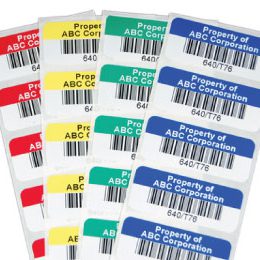
Fix: Use color in a controlled way. Assign colors to aisles, zones, or storage levels and keep the scheme consistent across rack labels, shelf labels, and overhead signs. Pair color with clear human-readable text, consistent character height, and logical data order. A simple visual hierarchy shortens search time and reduces missed pulls. This is one of the most cost-effective warehouse labeling solutions you can implement.
Mistake 6: Covering Old Labels Without Blocking Interference
Placing a new location ID directly over an old one can create scanner confusion and adhesive failure. Ghost bars from the original code may bleed through thin stocks, producing misreads. Stacked labels may lift at the edges, collect dust, and degrade quickly.
Fix: Use blockout constructions with opaque backers or remove the old label before you reapply. Clean the surface, allow it to dry, and then apply the new tag with firm pressure. When you retire a slot, plan the conversion in your warehouse labeling system so legacy codes do not linger and confuse operators.
Mistake 7: Treating Labels as Stickers Instead of a System
Many facilities buy labels piecemeal, then force them to fit. Without a plan, you get inconsistent naming, unclear zone logic, and conflicts with your WMS, voice-pick prompts, or robotic routes. The short-term savings on materials vanish into long-term labor and audit headaches.
Fix: Build your warehouse labeling system around the actual workflow. Start with your WMS location schema. Define how operators will scan each zone. Choose materials and adhesives that match surfaces and environments. Plan for future expansion and seasonal changes. Document standards for placement, fonts, symbol sizes, and data sequence. A system mindset turns labels from a cost into a throughput tool.
Warehouse Labeling Solutions by Area
Warehouses aren’t uniform. Racks, shelves, and floors each demand different visibility, durability, and scanning angles. Use the guidance below to tune your warehouse labeling system by area so picks stay fast and reads stay reliable.
Rack Labels That Respect Height, Angle, and Distance
Racks create long sight lines and varying approach angles. Decide where scans will occur. If operators scan from the floor or from lift trucks, select retro-reflective materials and larger symbol heights. For eye-level scans, high-contrast polyester tags on uprights work well. Keep labels out of fork paths, match numbering to your WMS logic, and verify quiet zones. This location-specific tuning keeps your warehouse labeling system fast and predictable.
Shelf Labels That Stay Clear and Easy to Update
Shelves change often and sit close to the picker. Choose compact formats with crisp human-readable lines and barcodes that scan cleanly at arm’s length. Use removable options for seasonal shifts or split-bin systems. In fast-change areas, consider holders or printable inserts that protect the code while allowing quick swaps. Consistency along the shelf edge speeds recognition and reduces hunt time.
Floor Labels That Survive Impact, Traffic, and Cleaning
Floors take the most abuse. Start with thick industrial films and aggressive adhesives that bond to sealed concrete. In turn zones and pallet drop areas, add overlaminates or cover plates. Place codes just outside travel lanes to limit scuffing while keeping sight lines open. Clean, degrease, and dry before installation, and round corners to limit edge lift. A durable floor plan prevents daily damage that would otherwise ripple through your warehouse labeling system.
Materials and Adhesives That Match Your Environment
The material you choose controls service life and scan reliability. Polyester resists abrasion and oils and stands up to routine cleaners. Vinyl conforms to rough surfaces. Polypropylene and polyethylene flex on bins and curved faces. Paper is cost-effective for short-term uses like cross-dock and shipping. For cold storage, specify constructions that bond at lower application temperatures and resist brittleness. In humid or washdown zones, seal faces and protect edges. In dusty aisles, favor smooth films that wipe clean and preserve contrast.
Adhesives deserve equal attention. High-tack acrylics hold on powder coat and metal. Low-surface-energy formulas grip slick plastics like HDPE totes. Cold-temperature adhesives bond in coolers and freezers. For temporary staging, removable adhesives leave surfaces clean. When retiring positions, blockout backers prevent ghost reads. Aligning material and adhesive to real conditions is the backbone of any dependable warehouse labeling system.
Barcode Label Readability: Practical Standards That Prevent Rescans
Readable symbols reduce wasted motion. Keep contrast high and backgrounds light. Maintain quiet zones and avoid placing codes near edges or hardware. Select the right print technology for the task. Thermal transfer with resin ribbon produces durable, high-contrast imaging that passes frequent scans and light cleaning. Validate symbol size and density for the actual read distance, and grade samples before rollout. These simple steps keep your barcode label inventory performing when volume peaks.
Invest in Warehouse Labeling Best Practices
Small errors in label placement, material choice, and barcode design compound into slower picks and higher costs. A proactive plan corrects that pattern. Start with the application, match material and adhesive to the surface and environment, size symbols for real scan distances, and use a consistent visual hierarchy. When you treat your warehouse labeling system as infrastructure, it pays you back every day.
Work With EIM To Fix Problems Fast And Prevent The Next Ones
Electronic Imaging Materials helps warehouses turn labeling from a bottleneck into a strength. Our specialists review your current state, test candidate materials on your actual racks, shelves, and floors, and build standards that align with your WMS and scanning equipment. You can expect fewer rescans, fewer relabels, and smoother training for new staff.If you are ready to replace firefighting with a plan, we are ready to help design a warehouse labeling system that matches your surfaces, your distances, and your workflow. Let’s get your locations readable on day one and reliable all year.on your actual surfaces, and standardize print so your crew scans cleanly the first time. If you’d like to streamline location IDs, improve read rates, and cut relabeling, we’re ready to help you design a dependable plan.