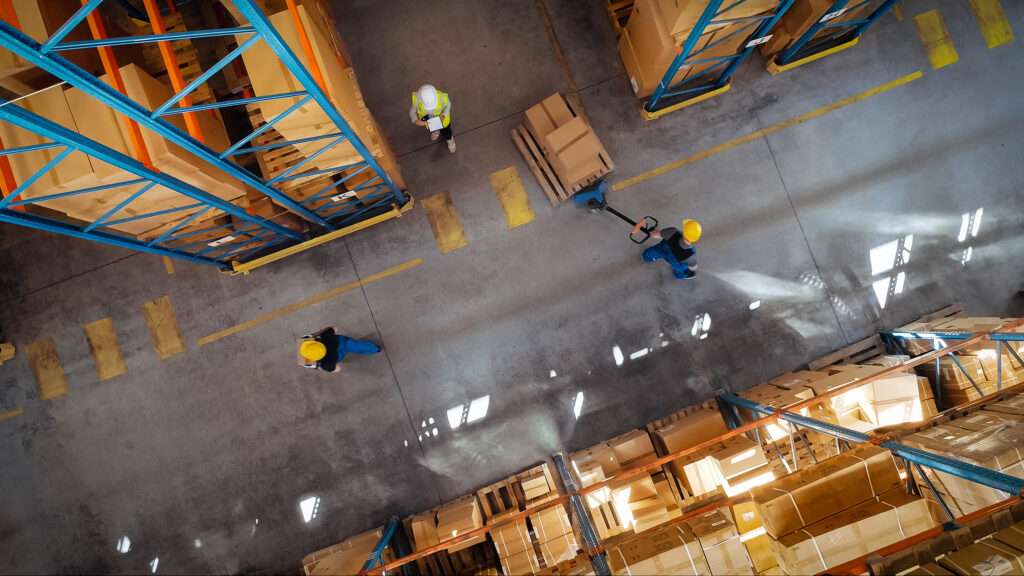
Retro-reflective labels have grown in popularity in recent years in industries such as logistics, warehousing, and manufacturing. Reflective labels provide a host of benefits; most notably, they’re scannable from long distances, visible even in low-light environments, and can withstand harsh conditions.
How Retro-Reflective Labels Work
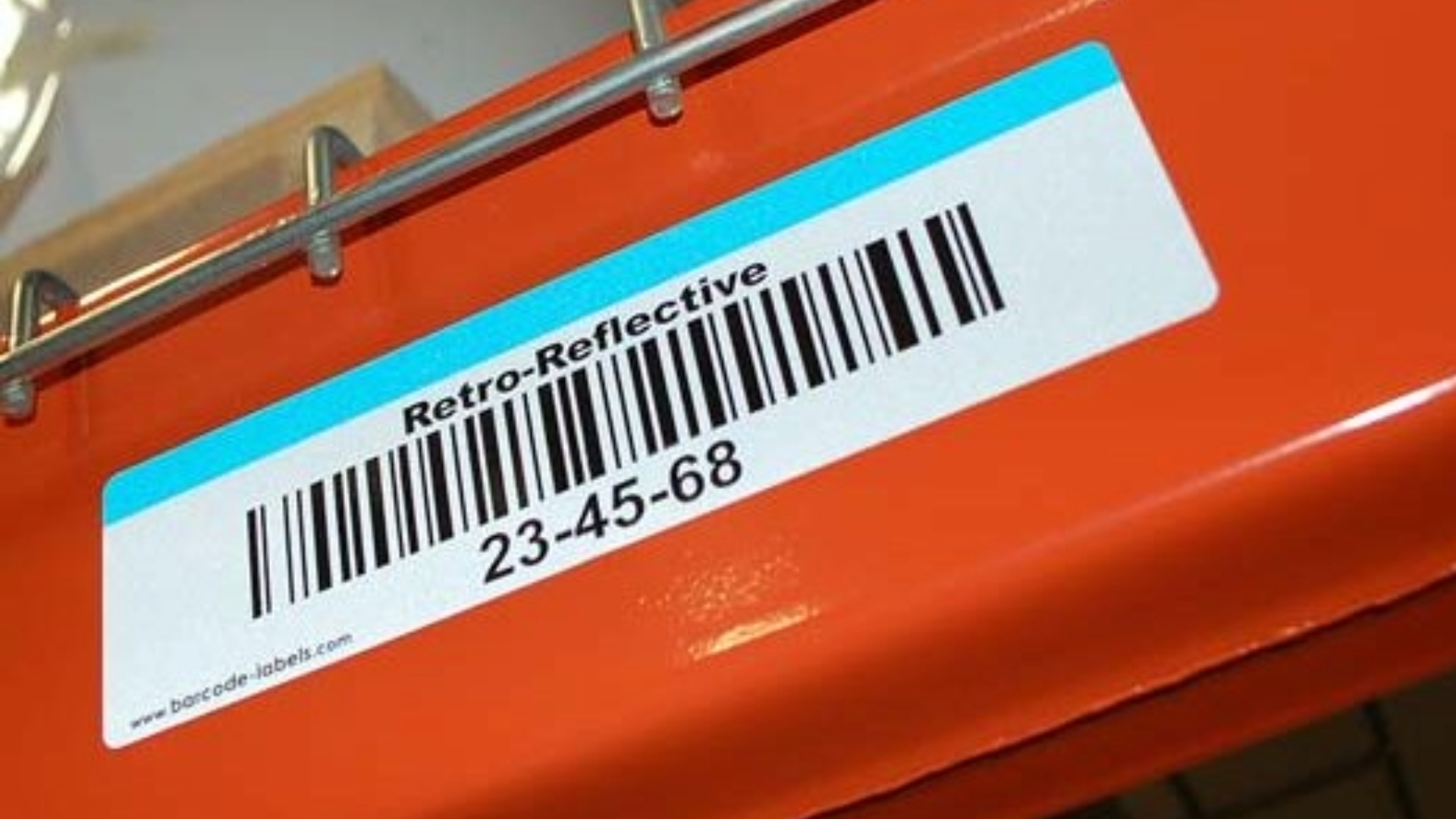
How are retro-reflective labels different from traditional labels? Retro-reflective labels are made with special particles that, as their name implies, reflect light directly back to its source, rather than diffuse in all directions. This allows long-range scanners to read barcodes—like our 381 Retro-Reflective labels—from distances up to 45 feet and work in low-light environments.
Benefits of Retro-Reflective Labels
Retro-reflective labels deliver a host of operational benefits when matched to the right use case, such as applications in warehouses, distribution centers, and other logistics sectors. Warehouses are getting larger, and labels are helping to enable their growth. Retro-reflective labels increase vertical capacity, improve picking productivity, and more.
Enhanced Scanning Range
Long-range scanners can read barcode labels at distances significantly greater than those supported by standard scanner and label setups. This makes them ideally suited for scanning items on tall shelves, high stacks, or large containers.
Greater Low-Light Performance
Because retro-reflective labels bounce light back to the scanner, they’re optimal for low-light applications, such as scanning in dimly lit warehouses and between tightly packed pallets or shipping containers, which block out light.
Increased Safety
The longer-scanning distances and better low-light performance of retro-reflective labels result in a safer working environment. Personnel can scan bins, racks, and shelves without ladders or other elevated work platforms. Similarly, the enhanced range allows personnel to avoid potentially hazardous areas, such as traffic lanes and blind spots.
Improved Efficiency
Retro-reflective labels enable greater scanning distances, improving operational efficiency. Operators can scan from the floor, allowing for quick, accurate reads that reduce errors and increase productivity. These labels also let warehouses expand their racking vertically, maximizing product storage per square foot.
Better Durability
Labels like EIM’s 381 Retro-Reflective are extremely robust and able to withstand harsh environments and conditions, including fluctuating temperatures, UV light, moisture, and abrasion. This allows retro-reflective labels to not only provide long-distance scanning, but also long lifecycles of reliable readability.
Versatility
One enormous advantage of retro-reflective labels is their versatility. Converters like EIM can customize retro-reflective labels to suit a variety of needs and applications. From unique sizes and shapes to different barcode symbologies and indoor and outdoor environments, retro-reflective labels are easily tailored to fit specific needs.
Retro-Reflective Label Compatibility
Although retro-reflective labels offer many advantages, there are also some factors to consider when using them.
Supporting Scanners
Not all scanners work with retro-reflective labels. Specialized scanners are required to take full advantage of their long-range capabilities, while also functioning effectively at medium and short range. Long-range and special industrial scanners use powerful lasers or high-intensity LEDs designed specifically to work with the light returned from retro-reflective labels.
QR Code Functionality
Do retro-reflective labels work with QR codes? Retro-reflective labels can work with QR codes and other 2D barcodes, but they present challenges. For optimal scanning, 2D barcodes rely on high visual contrast—the difference between light and dark modules—which is why they’re typically printed in black and white, the combination that offers maximum contrast.
Although the reflective properties of retro-reflective labels can reduce the contrast needed to read QR codes, they can work with QR codes—which brings us to an important consideration: testing.
Real-World Testing
Before committing to a full production run of labels for your warehouse or distribution center, it’s a good idea to request samples and test them. This allows you to see how they perform at the required scanning distances and exact light conditions of your facility, how they interface with your scanners, and how they hold up in your environmental conditions.
Electronic Imaging Materials, Inc.
Are you reflecting on the labeling strategy for your warehouse or distribution center? Curious if retro-reflective labels are right for your facility? Contact the Label Experts. With roughly four decades of experience, EIM can help you find the right label for your application—one that meets your scanning and symbology needs and delivers lasting performance—and offer strategic insight into integrating them into your existing workflow.