Ambient warehouses play an important role in storing goods and fulfilling customer orders in the e-commerce supply chain. They’re critical to operations—enabling identification, tracking, and operational efficiency. Ambient storage is one warehousing approach available to e-commerce companies, along with strategies like climate-controlled, cold, and deep-freeze storage. Selecting the right warehousing strategy is essential to the success of every application. So is pairing the right label to that application.
What Is an Ambient Warehouse?
At its most basic, an ambient warehouse is a facility kept at room temperature, storing goods that don’t require specific temperature control. Ambient warehouses don’t require the industrial cooling and refrigeration systems of other storage approaches. However, they do use standard HVAC, fans, and ventilation to keep temperatures within the ideal range, manage moisture, and prevent hot and cold spots.
Ambient warehouses are typically kept at temperatures ranging from roughly 60°F to 80°F (15°C to 27°C). That said, a facility’s actual temperature and operational demands depend on its location—for example, an ambient warehouse in Chicago faces different challenges than one in Orlando:
- Chicago Ambient Warehouse: Requires robust insulation and heavy-duty heating systems to maintain room temperature during cold winter conditions.
- Orlando Ambient Warehouse: Needs air conditioning and dehumidification to preserve room temperature in Florida’s sub-tropical climate.
Chicago and Orlando are just two examples. An ambient warehouse in a desert environment, like Phoenix or Las Vegas, would face its own unique demands.
Why Ambient Warehouses Are Popular in E-Commerce
Ambient warehousing is the backbone of e-commerce—it’s well suited to many of the top products sold online. Many popular online products don’t require strict storage Temperatures, including:
- Apparel
- Books
- Electronics
- Furniture
- Games
- Non-perishable foods
- Pet supplies
- Toys
When storage temperature isn’t a priority, ambient warehousing is often the solution.
Benefits of Ambient Storage
In addition to being ideally suited to warehousing numerous best-selling online products, ambient warehousing also offers a host of benefits to e-commerce companies.
- Versatility: Ambient warehouses can store a wide variety of goods and have the largest footprint of all logistics and storage spaces in the U.S., making them a practical solution for a broad spectrum of applications.
- Cost-effective: Ambient warehouses don’t require specialized infrastructure for heating, cooling, or humidity regulation, eliminating the expense of investing, maintaining, and operating this equipment.
Because ambient warehouses don’t use these energy-intensive climate control systems, they’re also a relatively green storage option and demonstrate responsible resource management.
Labels for Ambient Warehouses
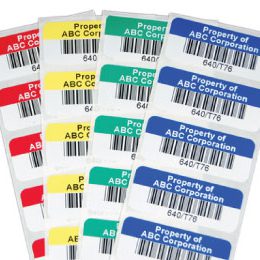
Ambient warehouse labels are key to keeping operations moving efficiently and accurately. Electronic Imaging Materials, Inc. (EIM) offers a range of products ideal for ambient warehouses:
- Retro-reflective labels are perfect for long-range scanning in high-bay storage configurations.
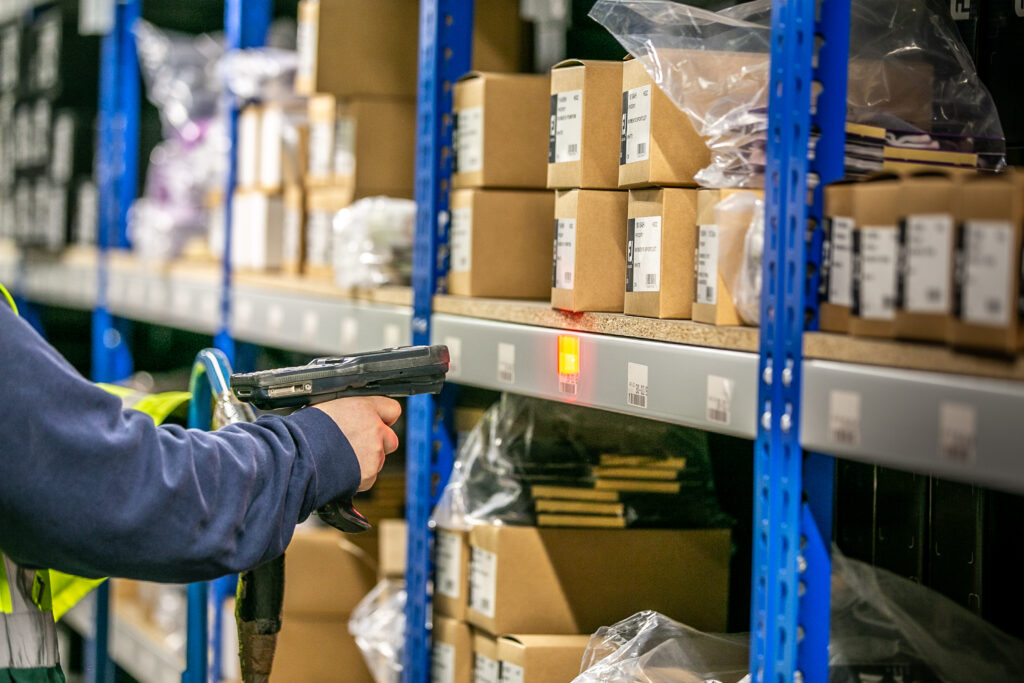
- Rack, shelf, and bin labels ensure warehouse pickers—whether human or autonomous—identify and retrieve the correct product.
- Pallet labels, including ones that adhere to shrink wrap, help forklift drivers place and move pallets to the proper location, bolstering warehouse organization and efficiency.
- Everpeel® labels are a removable and reusable alternative to magnetic location markers—providing a more affordable, lighter, more versatile option that sticks to materials like wood, cardboard, aluminum, and more.
In addition to our numerous off-the-rack options, EIM can also custom-build labels tailored to an application’s specific needs—from special sizes and configurations to long-lasting materials and high-tack adhesives.
Electronic Imaging Materials, Inc.
Supply chains are complex and ambient warehouses play a foundational role in moving many products from e-commerce companies to customers. A driving force behind these intricate operations is ambient warehouse labels—they keep inventory accurate, organized, and moving through distribution networks.
Looking to upgrade the labels in your ambient warehouse or any other warehouse, for that matter? Contact the Label Experts at EIM to discuss your operation and get recommendations tailored to your applications. Or, order up some samples and see for yourself.