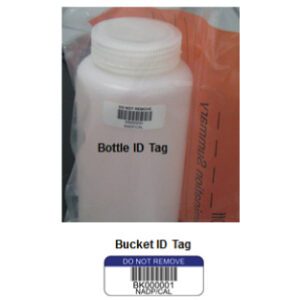
Natural history museum labels are invaluable. They connect a specimen with its associated data and any direct derivatives—such as molds, casts, photographs, or illustrations. Without this critical link, a specimen loses much of its scientific significance.
Museum Labels in Natural History
A missing label can dramatically reduce a natural history specimen’s scientific value. Without collection and identification data, researchers may be unable to verify the specimen’s origin, confirm its identity, or connect it to previous research. As a result, the specimen becomes far less useful for scientific study and long-term collection management.
The Scope of Natural History
Natural history is a broad field encompassing professions ranging from archaeologists to zoologists. Natural history collections can also contain a wide variety of objects, called specimens. For example, they can include:
- Taxidermy specimens
- Study skins
- Insects
- Brid nests
- Egg shells
- Botanical specimens
- Fossils
- Rocks
It’s also common for natural history archives to contain wet collections—that is, specimens preserved in liquid that would otherwise be difficult to preserve dry, for example:
- Fish
- Amphibians
- Invertebrates
- Fungi
- Organs
Equally expansive is the size of many natural history collections. Consider that London’s Natural History Museum is home to more than 80 million items. The Smithsonian National Museum of Natural History contains more than 148 objects and specimens.
It all adds up to a lot of labels for an enormous amount of different-sized, -shaped, and -surfaced specimens.
Natural History Museum Labels and Organization
Labels are essential for tracking, managing, and identifying the information associated with large collections and diverse specimen assortments. Identification is particularly important, as individuals within a species often share similar physical characteristics, and preservation fluid can obscure details in wet specimens.
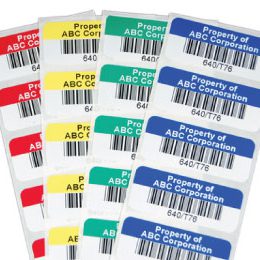
In addition to identifying objects, natural history museum labels also communicate vital information about specimens, such as their age and when and where they were collected. They can also convey internal information, such as a catalog number, questions about the specimen, or related publications.
Museum Label Life
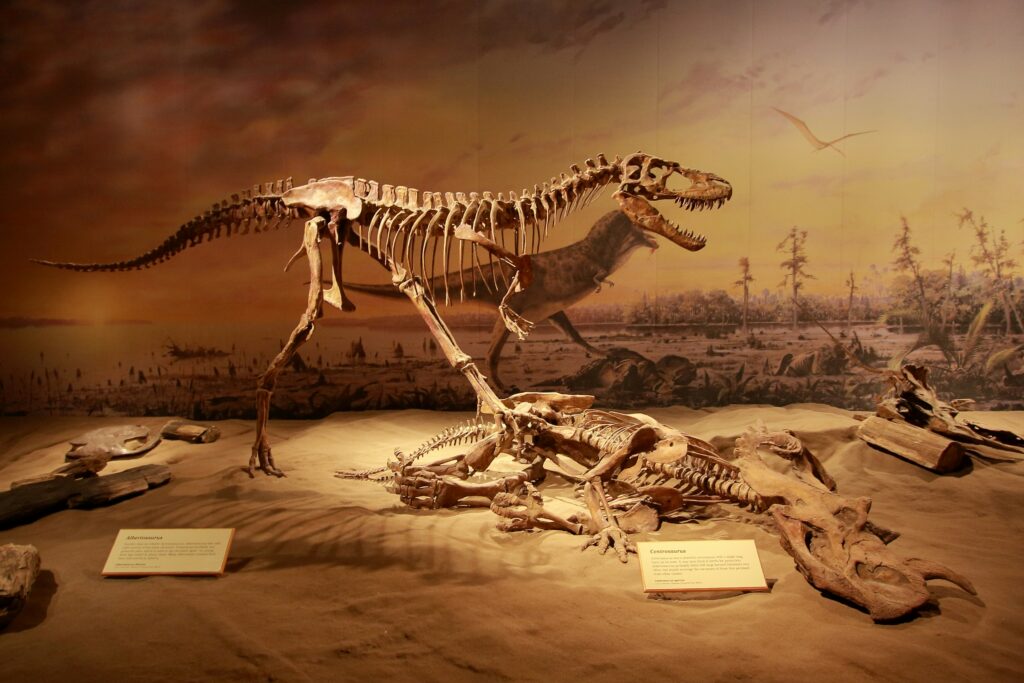
Imposing dinosaur fossils, massive whale skeletons, and sparkling mineral halls garner considerable attention from visitors, but most collections display only about 1% of their specimens. The other objects are in storage, loaned to other museums, or used in research—they’re a living library helping us understand everything from evolution to the environmental impacts of climate change.
Through it all, museum labels help track the movement of specimens, maintain a chain of custody, and ensure researchers can accurately attribute their findings to the correct specimen.
Natural History Museum Label Construction
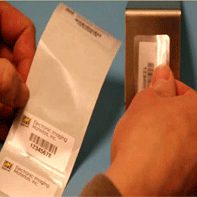
In general, natural history museum labels consist of three parts: a facestock on which the information is printed, an adhesive, and a liner. Because the facestock, printing, and adhesive all come in close contact with specimens, it’s vital to the performance and longevity of a label to choose the correct materials.
Facestock
The storage environment of a specimen is the primary factor in determining which facestock type to use. Labels for objects stored in conventional environments generally use paper facestocks. Conversely, wet collections and items stored in environments like freezers favor synthetic facestocks.
Paper is well-suited to museum tags because of its chemical stability. When selecting paper labels for natural history applications, it’s important to look for acid-free and lignin-free solutions.
- Acid-free labels use facestocks with a neutral pH of 7 or higher on the pH scale. Acid-free labels also employ pH-neutral adhesives to safeguard the long-term preservation of samples.
- Lignin-free labels provide lasting protection against potential damage. Lignin, a polymer that gives plants their rigidity, is often found in standard paper products and becomes acidic when it breaks down.
One important consideration for curators, collection managers, and conservators is that acid-free labels are only required to be acid-free at the time of manufacture, rather than throughout their entire lifecycle. In comparison, acid-free, lignin-free labels ensure stability over the label’s entire lifespan.
Facestock materials such as polyester and polyethylene are commonly used for labelling wet collections. Labels made with synthetic facestocks are more resistant to chemicals, solvents, and fluids than their paper counterparts. This makes them a fantastic choice for harsher natural history museum label applications.
Inks
Thermal transfer printing is the preferred method for printing archival labels. Thermal transfer printing uses a heated printhead and ribbon coated with wax, resin, or a wax-resin hybrid to melt the ink directly to the facestock’s surface.
Thermal transfer printing creates extremely durable and long-lasting text, graphics, and barcodes. It also resists moisture, fading, and smearing, making it ideal for long-term use, like for archival labels.
Adhesives
Permanent acrylic adhesives are generally the first choice for archival labels, thanks to their stability, longevity, and reversibility. While they don’t prioritize sheer bond strength, as other adhesives do, permanent acrylic adhesives provide the long-term durability and resistance to moisture and temperature fluctuations demanded by natural history applications.
Topcoats
Topcoats aren’t typically used in natural history museum labels. That said, they do improve protection against chemicals and increase durability. Consequently, they are sometimes used for wet-collection labels.
Electronic Imaging Materials, Inc.
Unsure which label suits your collection? The Label Experts at EIM can help you find the right fit or develop a custom solution tailored to your needs. Contact the Label Experts today!