A good label does more than sit on a shelf edge or rack beam. It guides picks, speeds cycle counts, and keeps your WMS in lockstep with reality on the floor. If you are launching a new facility, expanding capacity, or fixing a messy layout, a clear plan for labeling pays off every hour of every shift.

This guide explains the fundamentals, the major label types, and the choices that affect durability and scan quality. You will learn how labeling connects locations, people, and systems, and how to select constructions that survive your surfaces and conditions.
Warehouse Labeling Fundamentals
Labeling is the foundation for location accuracy, fast picking, and clean data. Locations become visible when they carry consistent identifiers that your team can read at a glance and your scanners can capture on the first try. A complete plan covers several zones.
- Rack and bin locations. Uprights, crossbeams, and compartments need clear, scannable IDs that match the location hierarchy in your WMS.
- Shelf-edge positions. Split-bin and small-parts areas benefit from compact codes and human-readable text.
- Floor markers. Ground-level labels and aisle markers guide carts and forklifts, and they reduce second guessing during putaway.
- Aisle and zone signage. Overhead and long-range markers help pickers orient themselves quickly.
- Pallet and staging areas. Temporary IDs move inventory through inbound, cross-dock, and outbound without losing traceability.
Labeling should fit your scanning workflow. Keep quiet zones, maintain contrast, and select the right barcode symbology for your scanner fleet. Integrate your label map with your WMS so that every location ID, from Aisle 10 to Bin C, is defined once and printed the same way every time. When you plan well, warehouse labels become the visual blueprint of your facility.
Warehouse Labels 101
Every environment calls for a different blend of facestock, adhesive, and imaging. Start with the use case, match the surface, and then validate under real conditions.
Rack Labels That Clarify Vertical Positions
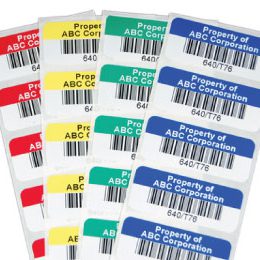
Use durable films, such as polyester, paired with high-tack acrylic adhesives that hold on powder-coated steel. Color bands by level and clear arrows reduce mispicks. For re-slotting programs, consider repositionable options that remove cleanly without residue. These are classic warehouse rack labels that keep vertical storage clear and consistent.
Shelf Labels for Small Parts and Fast Picks
Thin films or coated papers work well on smooth shelf fronts. Keep text legible and codes compact for tight spaces. If shelves are cleaned frequently, switch to a film with resin thermal transfer imaging for smudge resistance. Well-designed shelf labels speed picks and reduce strain on new staff.
Floor Labels That Withstand Traffic
Forklifts, pallets, and boots punish ground-level markers. Choose heavy-duty films, a permanent adhesive, and a protective overlaminate. Place labels just outside the highest traffic line to cut down on abrasion. Floor markers that scan reliably cut search time and improve staging discipline.
Pallet and Cart Labels for Moving Inventory
Temporary IDs need a balance of tack and removability. Select adhesives that bond on corrugate yet peel away without tearing fibers. For carts and totes, use flexible films that conform to curves and low surface energy plastics, and plan for regular relabeling cycles to avoid buildup.
Long-Distance and Special-Use Options
Labels that live high above the floor, move in and out of staging, or sit inside cold rooms face different demands than standard rack markers. Matching the construction to the task keeps scans reliable and changeouts painless.
Retro-Reflective for Long Scans
Use retro-reflective films on overhead beams and aisle signs. These materials return light directly to the scanner, which extends read range and improves first-pass reads from forklifts.
Blockout to Cover Old Labels
Choose opaque backers when you must retire a location ID. Blockout layers prevent show-through and “ghost” barcodes that can confuse pickers and scanners.
Removable for Staging Areas
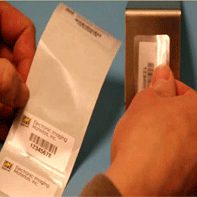
Apply clean-release adhesives where locations change frequently. They remove without residue, so surfaces stay tidy and ready for the next label.
Cold-Temp for Freezers
Select freezer-grade acrylics for cold rooms and docks. These formulas bond at low application temperatures and resist brittleness during long-term exposure
Material and Durability Choices
The right construction balances print clarity with staying power. Consider how each layer will perform on your surfaces and through your workflow.
Facestocks
Polyester resists abrasion, oils, and cleaners for long service life. Polypropylene and polyethylene add flexibility for curved bins and containers. Paper is a practical choice for short-life tasks, such as shipping and cross-dock labels.
Adhesives
High-tack acrylics anchor to powder-coated uprights and bare metal. Low-surface-energy formulas grip slick plastics like HDPE totes and polypropylene bins. Cold-temperature grades maintain adhesion in coolers and freezers.
Imaging
Thermal transfer with resin ribbons produces durable, high-contrast bars and text that hold up to handling and light solvents. Direct thermal is suitable for short-duration labels placed at packing or staging where printers sit nearby.
Protection
Add overlaminates or topcoats when labels face heavy traffic, cleaners, or moisture. Extra protection is especially useful on floor markers and in washdown zones where abrasion and chemicals are common.If labels fail, the costs show up immediately. Faded bars slow lines. Edge lift catches on cartons. Adhesives that cannot handle cold rooms fall off at the worst moments. Build durability into your plan and the issues vanish before they start. Thoughtfully placed warehouse labels are a daily productivity tool, not a maintenance chore.e burden.s, UV-curable inks offer a dependable solution that bridges the gap between quality and speed.
Share your surfaces, temperatures, cleaners, and scanner types with Electronic Imaging Materials. You will receive a simple plan for materials, adhesives, and imaging, plus samples you can test on your floor. Validate quickly and move forward with confidence.
Choose the Right Labels for the Right Environment
Surfaces and conditions dictate success. Match each area to a construction that fits the job.
Metal Racks and Powder-Coated Steel
Select polyester film and a high-tack acrylic adhesive that resists edge lift on textured finishes. Add color bands for levels and arrows for direction, and lock placement rules into your SOPs.
Plastic Totes, Bins, and Crates
Use flexible films and low-surface-energy adhesives that hold on smooth plastics. If bins are washed, pair resin ribbons with a chemical-resistant topcoat. Consistent custom warehouse labels keep bins readable through every loop of reuse.
Corrugate, Pallets, and Wood
For cartons, coated paper or thin films with an all-purpose adhesive do well. For wood, use aggressive initial tack that bonds to fibers. If pallets are reused, pick clean-release constructions to avoid residue and build-up.
Cold Rooms, Freezers, and Hot Docks
Freezer-grade acrylics allow cold application and long-term hold at low temperatures. In warm, sunny dock doors, use UV-stable films and adhesives designed for heat. In both cases, verify print contrast with your scanners after environmental exposure. When conditions swing, it pays to standardize warehouse labeling systems that account for those extremes.
Integrate With Your WMS and Scanning Workflows
Great labels are only useful when they match the data model. Build location IDs directly from your WMS structure, and avoid one-off formats. Use consistent symbologies and quiet zones. Validate barcode grades with the same scanners your team uses on the floor. If you run Epicor, Manhattan, or another WMS, generate label files from the system to prevent transcription errors. Well-integrated warehouse labels keep transactions clean from receiving through shipping.
Quick Reference for Bins, Carts, and Mobile Equipment
Every warehouse depends on clearly labeled bins, carts, and mobile tools to keep daily operations running smoothly. These moving parts connect storage, staging, and fulfillment—and their labels take more wear than most. Choosing the right materials and adhesives ensures they stay readable, scannable, and consistent through constant use.
Cart labels
Use durable films with clean-release adhesives so routes and task IDs can be swapped without sticky residue. Pair with high-contrast printing and a layout that leaves generous quiet zones for quick scans on the move.
Bin IDs
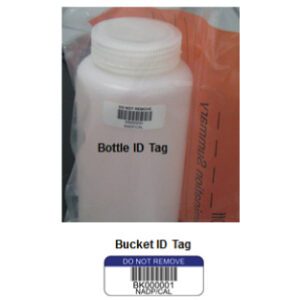
Choose compact barcodes with clear human-readable lines. Low-profile films prevent edge lift, and strong initial tack keeps labels seated on painted metal, plastic bins, and shelf fronts.
Mobile Assets
Label totes, dollies, and rolling racks with abrasion-resistant films and a thin laminate. This combination resists scuffs, cleaners, and constant handling, preserving barcodes through daily use.
Build a Better System With Electronic Imaging Materials
A clear labeling strategy turns confusion into clarity and wasted motion into productive work. Electronic Imaging Materials helps you map surfaces, environments, and scanning practices to the right constructions. We provide preprinted labels for rack launches, durable options for freezers and floors, and guidance on in-house printing for ongoing maintenance. When you are ready to upgrade, expand, or standardize, we are ready to help you implement warehouse labels that perform every day.