Life science laboratories drive research, innovation, and advancement in fields like biotechnology, genomics, and pharmaceuticals. They play a vital role in answering some of life’s most important questions. Barcode laboratory labels are the connective tissue of cutting-edge clinical facilities, providing a host of benefits.
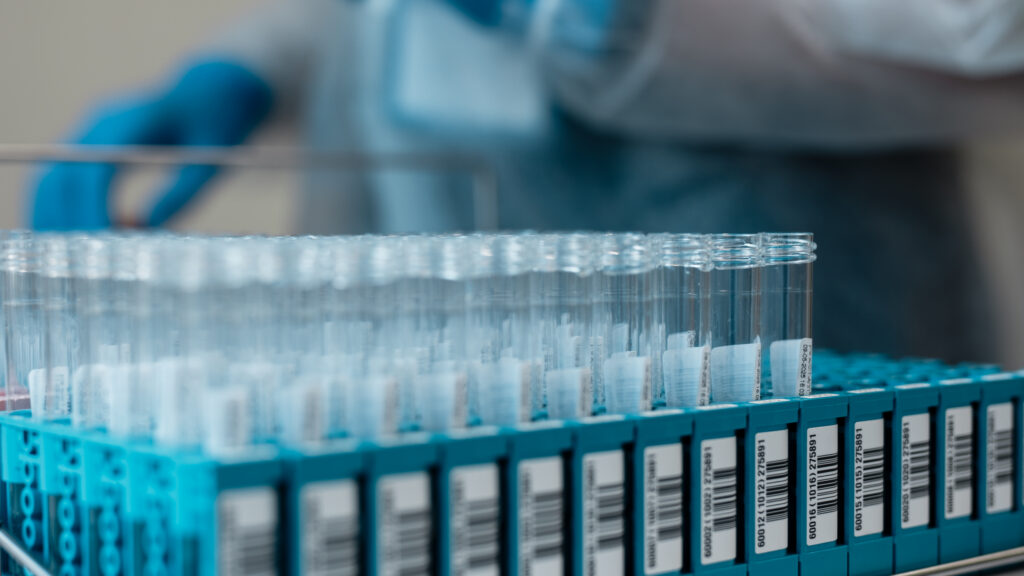
Life science laboratories drive research, innovation, and advancement in fields like biotechnology, genomics, and pharmaceuticals. They play a vital role in answering some of life’s most important questions. Barcode laboratory labels are the connective tissue of cutting-edge clinical facilities, providing a host of benefits.
The Benefits of Clinical Lab Labeling
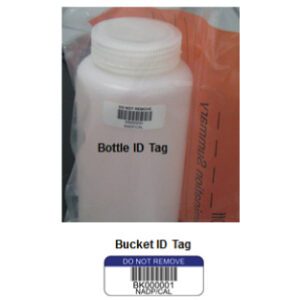
Labels are essential infrastructure for clinical lab applications, helping keep operations organized and efficient and protecting patient safety.
Accuracy
Clinical labs—a fast-growing sector in life science—play a considerable role in healthcare. According to the CDC, 14 billion lab tests are conducted annually, and 70% of medical decisions depend on them. Labels safeguard against errors, providing easy identification of specimens and materials, and protecting time, resources, costs, and most importantly, patient health.
Productivity
Barcode lab labels enhance the productivity of life science facilities, improving both operations and outcomes. Barcode labels are the operational backbone of clinical laboratories, enabling accurate identification, increased visibility, and ultimately more efficient workflows.
Safety
Labels are the first line of defense against threats posed by hazardous materials, dangerous chemicals, and procedure errors, alerting personnel to potential risks and allowing them to make quick identifications.
Compliance
While labels are a best practice in many fields, in others they’re a requirement. Multiple regulatory bodies oversee compliance in life science facilities—from OSHA’s rules for labeling hazardous chemicals, to the CMS’s certification of labs handling human specimens, to the FDA’s monitoring of pharmaceutical development.
Expiration
Many of the chemicals and reagents used in life science labs expire. More so, their lifespan often decreases dramatically once they’re opened. Labels allow labs to track the dates chemicals and reagents are received, opened, and expire. This ensures integrity and prevents wasting materials and inaccurate testing.
Storage
Some samples and chemicals require particular storage conditions, whether it’s a certain temperature or a special container. Labels help ensure proper storage and guard against mix-ups and degradation.
Understanding Clinical Lab Labels
For labels to be effective, they must remain legible and/or scannable and securely attached. This is no small undertaking considering the challenging applications they’re often subjected to. For example, labels used in wet labs often must retain performance despite exposure to harsh chemicals, high-heat autoclaving, or cryogenic storage. Dry lab labels must often withstand heat, abrasion, and static resistance.
Because performance is paramount for labels in life science applications and the unique demands of different labs and sectors, it’s essential to select labels tailored to your unique requirements. There are several factors to consider when selecting the best labels for life science labs.
Topcoats
Topcoats are often used when creating lab labels. They offer an extra level of protection against environmental exposure and physical damage and produce sharp images that remain readable/scannable in demanding environments—resisting smearing, smudging, and fading.
Print Method
Thermal transfer printing is the go-to method for clinical lab labels. This print method melts ink from a ribbon onto a label, resulting in a highly durable and long-lasting image. Thermal transfer printing uses wax-, resin-, and hybrid wax/resin-based ribbons, but resin is the tried-and-true solution for labels that must resist chemicals, extreme temperatures, and abrasion.
Facestock
Facestock, also known as substrate, is the material on which barcodes and key information are printed. Several materials are used for facestock, including polypropylene, polyester, and vinyl. Each has specific qualities that make them ideal choices for particular applications.
- Polypropylene is a common material used for lab label facestock thanks to its resistance to water, chemicals, abrasion, and cold temperatures. Labels made with polypropylene facestock can handle moderate heat but aren’t made to withstand high-temperature autoclave sterilization.
- Polyester facestocks provide excellent protection against chemicals and abrasion. Polyester-based labels are also suitable for high-heat environments, such as autoclave sterilization.
- Polyethylene facestocks are lightweight and flexible, making them an optimal choice for flexible, squeezable items, like blood and plasma bags, as well as tubing and IV lines.
- Vinyl label facestocks offer superb resistance to water and chemicals. They’re also flexible, allowing them to adhere to curved, uneven shapes. Vinyl is commonly chosen for warning and safety labels.
Adhesives
Adhesive is what keeps a label attached to whatever it’s applied to. Generally, laboratory labels use either an acrylic or rubber/hot/melt adhesive.
- Acrylic adhesives are the workhorse of general lab applications. They provide a good balance of performance and affordability, offering long-lasting performance in moderate conditions. Permanent acrylic adhesives generally perform well in both extreme high and low temperatures—from autoclave to cryogenic applications—and are resistant to common lab chemicals.
- Rubber/Hot Melt adhesives are a strong choice for cold-temperature applications. They withstand repeated freeze/thaw cycles but don’t possess the chemical resistance of acyclic options.
Electronic Imaging Materials, Inc.
Understand the benefits of labels for clinical laboratories, but still unsure of which label is right for your lab? Contact the Label Experts. With almost 40 years of labeling experience, we can help you select the right label for the application. You can even request samples to see our labels in action before committing to buying.