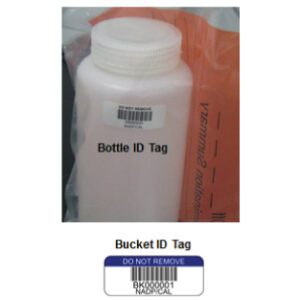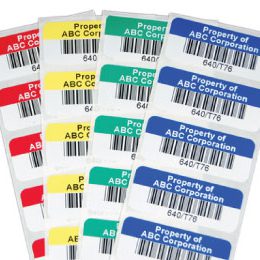
Labels face many challenges in freezing temperatures and on frozen surfaces, especially in applications like cold chain logistics. Labels for cold chain logistics must stay securely attached and legible across the entire cold supply chain while facing extreme temperatures, moisture, degradation, and handling to keep operations efficient and compliant.
The best labels for cold chain logistics feature materials, including facestocks, adhesives, laminates, and printing, that are engineered to thrive in such demanding environments.

What Is Cold Chain Logistics?
Cold chain logistics is the coordinated handling, storing, and transporting of temperature-sensitive goods, ensuring consistent environmental conditions from origin to destination. It’s one of the fastest-growing segments in the supply chain, with an expected compound annual growth rate (CAGR) of 14.5% between 2024 and 2030.
The growth of cold chain logistics is driven by biologics and vaccines that require cold storage, increased consumption of frozen and packaged meals, and e-commerce and q-commerce grocery platforms.
While cold chain logistics is a segment within the broader supply chain, it contains more specific segments with different requirements. Milk, for instance, requires chilled storage temperatures, different from the frozen storage ice cream needs. Both differ from the ultra-cold storage requirements of some medications, which demand storage temperatures as low as -80⁰C.
Whether in chilled, frozen, or ultra-cold applications, cold chain labels must stay legible and adhered.
The Importance of Labels for Cold Chain Logistics
Cold chain logistics is an over $97 billion market. Labels are essential to keeping it efficient and productive by:
- Enhancing processing: Allowing quick, accurate, error-free identification and movement of products.
- Improving visibility: Enabling tracking of products moving through the supply chain, capturing details on everything from the warehouses where they were stored to the trucks they were transported with to the personnel who handled them.
- Protecting products: Providing clear guidelines for handling products as they move from origin to end user, helping to safeguard product integrity.
- Providing security: Tamper-evident labels can help prevent counterfeiting and tampering through the cold-chain distribution process, defending reputations and preserving quality.
- Ensuring compliance: Many of the products moving through the cold supply chain face strict regulations. Labels are essential for meeting standards, passing audits, and avoiding recalls.
The benefits of labels for cold chain logistics are significant. So are the risks of using labels unable to withstand the challenge. Illegible or missing labels can lead to spoilage, mishandling, delays, recalls, unhappy customers, or regulatory risk.
Cold Chain Logistics Labeling Challenges
The environments in which cold chain labels operate are dynamic—labels endure shifting temperatures as they move from cold storage and cross-docking areas to transit and regulatory checkpoints. Labels must perform not only in the environment they’re engineered for, but in every condition they experience.
Freeze-Thaw Cycles
The temperature fluctuations labels experience as they move through different stages of the cold supply chain pose a significant challenge. This is particularly true in hot, humid regions, where warm air contacting cold items causes moisture from the item’s surface or surrounding air to condense and freeze, creating an invisible layer between the label and what it’s stuck to. These layers make secure bonding difficult by forming a barrier between the label and the surface it’s applied to, which can lead to peeling, flagging, and failure.
The best labels for cold chain logistics freeze-thaw cycles use advanced adhesives that can penetrate moisture layers and bond to the material below.
Degradation
The environments labels endure in cold chain logistics can also create issues for facestocks. Cold and freezing temperatures can make paper labels brittle, increasing their susceptibility to cracking and tearing. Similarly, frigid cold-chain conditions can cause synthetic facestocks to lose pliability, making them prone to damage.
When selecting labels for cold chain logistics, it’s vital to select materials engineered to withstand the environment they’ll operate in.
Abrasion
From loading and unloading to storage and final delivery, products are handled frequently as they move through the cold supply chain. Constant contact during processing can lead to scratching and tearing. It can also cause print to smear, scuff, or wear away.
High-quality printing methods help ensure labels remain legible and do their job. Thermal transfer printing using wax or wax-resin ribbons is a proven method for delivering a durable print able to withstand the challenges of cold chain logistics.
Popular Labels for Cold Chain Logistics
There’s no one-size-fits-all labeling solution for cold storage warehouse environments— everything from application to environment determines the ideal label. That said, some labels are well-suited to cold chain logistics.
- Freez-R-Mark: Our go-to label for freezer racks and shipping containers. These stone-cold reliable labels can endure temperatures as low as -65°F (-54°C) and bond on surfaces with some moisture or frost buildup.
- CryoLabel®: A staple for customers requiring labels for the most frigid conditions, these seriously cool labels are ideal for ultra-cold applications and withstand temperatures down to -112°F (-80°C). Common CryoLabel® applications include use in genetics, virology, and microbiology labs, as well as special shipping containers using dry ice, and individual items, like vaccines shipped in temperature-controlled thermal containers.
- Cold Temp Labels: Are a popular choice for applications where traditional labels might fail, like racking in refrigerated warehouses.
- FloorCode™ Streamline: Not a label per se, but rather a shield that protects floor labels from high traffic and heavy equipment in busy cold storage facilities. FloorCode™ Streamline keeps labels adhered and legible in temperatures reaching -40°F (-40°C).
Electronic Imaging Materials, Inc.
Cold supply chains demand labels engineered for their environment, including extreme temperatures, moisture, and handling. Understanding these challenges and partnering with a Label Expert is the surest way to find a solution that performs, lasts, and keeps your operation running smoothly. Contact the Label Experts at EIM to learn more about our labels for cold chain logistics.