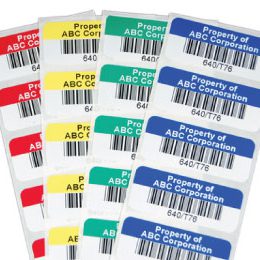
Barcode labels drive traceability and efficiency throughout the automotive industry’s complex, multi-stage workflows. High-quality, application-specific barcode labels are essential across every stage of the automotive supply chain, from individual components to end-to-end logistics.
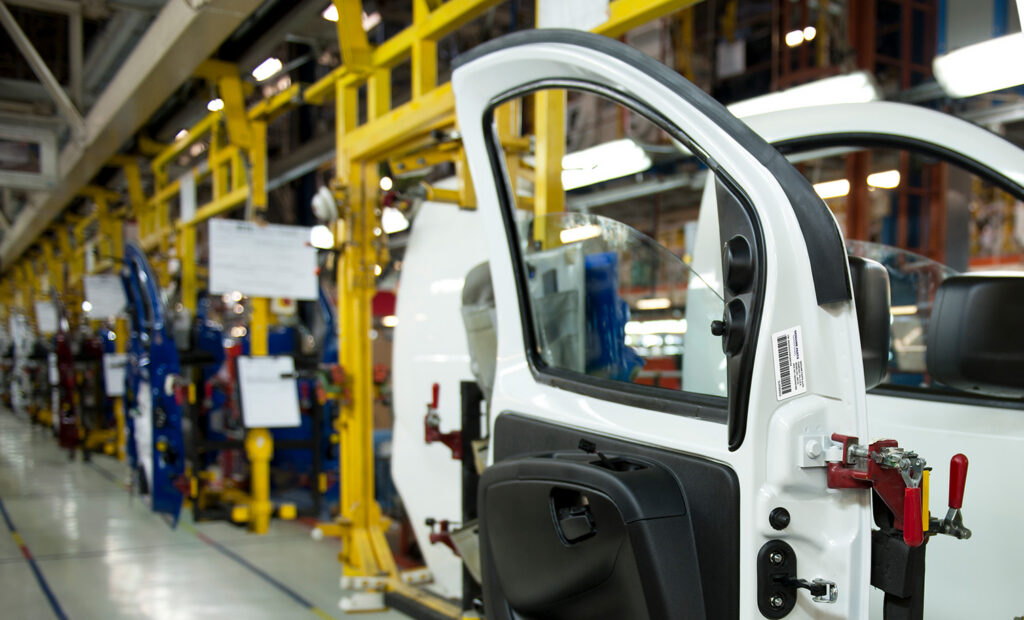
The Automotive Industry & Labels
Roughly 30,000 individual parts are used in the production of a single vehicle today—from large, easily recognizable parts, such as seats, to small, unseen sensors. Adding further complexity, many of those parts are sourced from a number of different suppliers.
The Value & Necessity of Labels
Keeping track of components, managing inventory, and ensuring visibility throughout the production process are vital to productivity and profitability. Consider that, according to a 2022 Forbes article, the average automotive manufacturer loses $22,000 per minute when the production line stops. Just think, choosing an inferior barcode label to save a few cents could run up hundreds of thousands of dollars in expenses in the time it takes to eat lunch.
Once a vehicle is built, the critical work of barcodes continues. Automotive barcodes convey valuable information, including part numbers, manufacturing dates, and batch details, all of which are essential for everything from quick identification during service to managing recalls.
Ultimately, barcode labels facilitate faster assembly and repairs, streamline services, and improve end-to-end efficiency.
Automotive labels serve a wide variety of purposes, including:
- VIN labels: Vehicle identification numbers are used for registration and insurance purposes
- Compliance labels: Display required information about everything from airbags to emissions to fuel type
- Warning labels: Alert users to potential hazards, like hot surfaces, contents under pressure, and moving parts
- Certification labels: Indicate a vehicle meets certain standards, for example, emissions
- Component labels: Make it easy to identify specific parts
- Service-reminder labels: Notify of upcoming maintenance, like an oil change
- Instruction labels: Guide operations ranging from the plug-in procedure for EVs and hybrids to anchoring a child seat
- Tamper-evident labels: Deter unauthorized tuning or modification of systems like engine control modules
Labels continue to make further inroads in the automotive industry. It’s becoming increasingly common for manufacturers to link information like owner’s manuals, service histories, and maintenance guides to QR codes for easy access.
Benefits of Automotive Labels
Given the sheer number of car parts that require labels and the diverse purposes they serve, it’s no surprise that labels offer numerous benefits to the automotive industry.
Traceability
Barcode labels provide traceability—from manufacturing to distribution to aftermarket services—ensuring production quality and regulatory compliance, while streamlining the supply chain and optimizing the production process.
Automotive manufacturing is getting more complex, with extensive supply chains, a multitude of parts, and increasingly sophisticated systems. Tracking through every stage of production has never been more critical. In the event of an issue, manufacturers can use information like the supplier, manufacturing date, and batch number to avoid costly recalls.
Logistics
The automotive industry depends on parts from a vast network of suppliers spread across the globe. A single car might have a radiator made in Canada, brakes from India, airbags from Mexico, and windows from China—barcode labels allow manufacturers to track tens of thousands of parts as they travel around the world and through the supply chain.
Production
Ensuring the proper component arrives at the right part of the production line at the right time is essential to efficient manufacturing. Barcode labels enable tracking of everything from raw materials to finished goods, enhancing overall operational productivity.
Barcode labeling systems also facilitate efficient assembly line processes. They help track the movement of parts along the production line, ensuring that the right components are used at the right stages of manufacturing, minimizing errors, and enhancing overall production efficiency.
Data
Barcodes provide quick and easy access to a wealth of valuable data. Using barcodes, it’s possible to view real-time inventory and pricing information. Barcodes can also supply manufacturers with vital information about product lifecycles and future service requirements—improving customer satisfaction and opening potential revenue streams.
ROI
Access to fast, relevant information. Supply chain efficiency. Improved logistics. Increased uptime. Fewer mistakes. In the automotive industry, barcodes are more than a useful tool—they’re an investment that pays off.
Challenges Facing Labels
For automotive labels to remain effective, they must remain attached and legible, even after years in demanding conditions such as extreme temperatures, chemical contact, wear and abrasion, and exposure to moisture and UV light.
Durability is non-negotiable for automotive labels. The consequences of failure are significant, ranging from compliance violations and warranty claims to higher service costs and increased error rates.
Electronic Imaging Materials, Inc.
EIM is committed to helping customers find label solutions. With decades of experience, custom-label expertise, and labels for everything from windows to silicone-coated hoses, EIM has a barcode label for your application. Contact the Label Experts to discover how we can help you barcode with confidence, with labels that return on investment and meet the demands of the automotive industry.