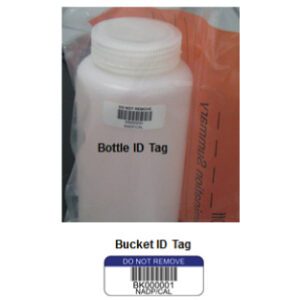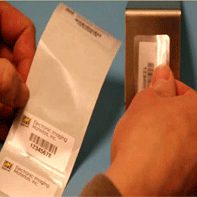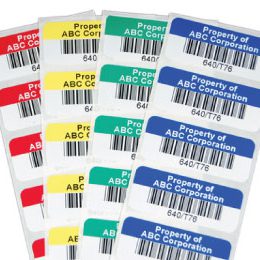
Data centers can house hundreds of racks, thousands of servers, and miles of cable—labels help bring order to the complex network of infrastructure, equipment, and connecting layers. This makes establishing a well-executed labeling strategy and understanding the challenges facing data center labels essential to optimizing the efficiency, management, and troubleshooting of today’s increasingly large and complicated data centers.
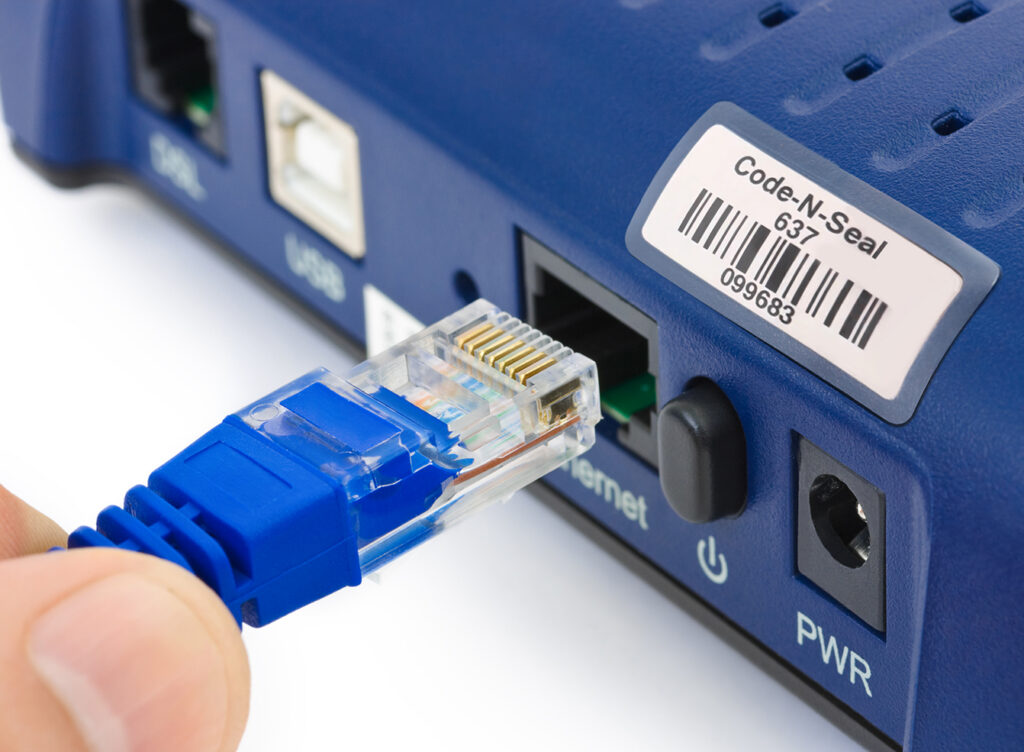
Deploying Labels in Data Centers
Labels deliver value at every level of a data center—from essential infrastructure such as racks and cabinets to equipment like routers, servers, and switches. Because labels in data centers are implemented for a wide range of uses—each with its own unique challenges—it’s essential to work with a label partner that can meet your particular needs.
When developing a data center labeling strategy, remember you may require everything from ultra-durable floor navigation labels for wayfinding to asset labels, making it easy to identify storage arrays, firewalls, and patch panels.
A label partner, like Electronic Imaging Solutions, can help provide custom label solutions designed to meet the unique challenges facing your facility.
7 Challenges Facing Data Center Labels
Because of the wide range of uses for labels in data centers, labels face many challenges, including operational obstacles, environmental factors, and information overload.
1. High Temperatures
Early data centers were kept cold to protect hardware, but modern equipment is much more heat-resistant, and data centers no longer run cold rooms to save energy and cut costs. In fact, today’s data centers can run quite hot, placing considerable thermal stress on identification labels.
High temperatures, along with other stressors like targeted cooling (such as hot/cold aisles) and mechanical vibrations, can cause suboptimal labels to lose adhesion or readability.
2. High Humidity
Data centers typically maintain a relative humidity range of 40% to 80% in environments where there isn’t a significant concern of copper and silver corrosion. This range balances the need to protect against static electricity buildup and discharges at low humidity, which can damage delicate equipment. It also guards against hardware corrosion, short circuits, insulation degradation, and shortened connector and contact life cycles caused by high humidity.
High humidity, particularly when combined with the intense thermal loads typical of data centers, can expose inferior labels to several issues—most notably loss of adhesion and accelerated degradation over time.
3. Regular Cleaning
Dust poses a serious risk to data centers—it acts as an insulator and obstructs airflow, adding stress to sensitive hardware. It can also contain corrosive materials, which can cause short circuits. Consequently, data centers require regular cleaning. The use of cleaning agents and methods, like alcohol wipes and pressurized air, can cause substandard labels to fail to adhere or smear.
4. Physical Damage
High-density environments with tightly packed racks full of servers, switches, and storage devices can result in common contact with everything from human hands to tools to cables—all of which can wear labels. Tears, scratches, scuffs, and lifting edges can cause labels to fail or become unscannable.
5. Unusual Shapes
Whether it’s important infrastructure such as raised floors and pipework, or critical components like ports and connectors, data centers are filled with uniquely shaped items. Inappropriately sized labels can make information difficult to read or access, increase the odds of human error, and affect adhesion.
6. Long Lifecycles
While data center hardware turns over relatively frequently, floors and racking can remain in service for decades. Labels must meet the demands of their application, whether affixed to networking equipment or adhered to a high-traffic floor.
7. Information Overload
It’s easy to pack data center labels with information; however, too much information or overly long and unintuitive names can undo the clarity and order that labels are designed to provide. Clear, concise labels that quickly and easily convey information are critical—both for everyday operations and in worst-case scenarios.
Maintaining Data Center Labels
Understanding the issues encountered by labeling systems is a vital step toward keeping data centers organized and knowing how to choose the right label for data center environments.
Like performing security updates and network checks, there are steps you can take to keep your labeling system working at its best. Proactive operations create and follow a regular maintenance schedule, including audits, reviews, and assessments to:
- Ensure labels remain readable
- Inspect for damage or deterioration
- Check new installations for accuracy
Forward-thinking data centers want to do more than stay on top of their current labeling systems—they want to look ahead. This includes:
- Auditing labeling standards and compliance
- Assessing the performance of their labels
- Collecting and analyzing feedback
- Planning for upgrades and replacements
Labels are a vital operational tool for data centers—ensuring they’re functioning at a high level is vital to their organization and efficiency.
Electronic Imaging Materials, Inc.
Understanding the challenges facing labels is just one step in ensuring your labels return on your investment in them. A trusted label partner can help you select labels designed to meet the distinct issues facing your facility.
Electronic Imaging Materials is a top-rated company providing data center labeling solutions and offering a wide selection of label solutions for small server rooms to today’s cutting-edge hyperscale data centers, with solutions covering everything from:
- Color-coded labels that make it easy to identify zones, hardware, and functions while keeping labels clear and uncluttered
- QR code and barcode labels, which provide access to detailed information while maintaining readability
- Labels for extreme temperatures, made with durable label materials for high-heat data center environments
- Labels for high-use areas that can stand up to years of heavy traffic
- Rack labels that are custom-made to meet your particular needs
- Asset tags that can hold up to daily use and contact with techs and tools
Not sure how to choose the right label for data center environments? Contact the Label Experts! The team at Electronic Imaging Materials can help your data center increase efficiency and uptime, cut costs, and navigate the labeling challenges facing today’s and tomorrow’s data centers.