The right label in the right place turns a busy warehouse into a predictable system. The wrong label slows picks, confuses scanners, and creates rework. If you’re planning a refresh or building a new layout, selecting warehouse labels by application, surface, and environment will save time and keep your locations readable from day one.

Below is a clear framework that shows how to match materials, adhesives, and print to your use case. It’ll help you avoid trial-and-error and move forward with confidence.
Start With the Application, Not Just the Label
Every labeling zone has different demands. Pallet racks often require long-range scanning and clear zone identification. Shelves need compact identifiers that staff can read at arm’s length and update more often. Floors take the most abuse from forklifts, pallets, and cleaning, so they call for rugged constructions and protective layers. When you choose warehouse labels, start with how and where they’ll be used, then select the construction that meets those conditions.
Misalignment between application and label type leads to common problems. Codes on high beams that are too small will slow scanning. Shelf stickers that leave residue collect dust and degrade read rates. Floor markers without protection scuff and fade. Defining the application first prevents these failures.
Warehouse Labeling Solutions for Each Location
Labeling in a warehouse isn’t one-size-fits-all. Each zone—racks, shelves, and floors—needs its own balance of visibility, durability, and material performance. A well-planned system ensures workers can scan locations quickly, reduce errors, and keep workflows moving smoothly. Whether your operation relies on long-range scans from forklifts or quick hand scans at packing stations, label selection by location is the foundation of a dependable warehouse labeling system.
Clear, durable warehouse labels cut downtime, support efficient picking, and align your facility’s layout with digital inventory data. When matched correctly to each surface and workflow, they hold up under stress, protect data integrity, and minimize relabeling costs.
Rack Labels: Plan for Height, Angles, and Scan Distance
Racks introduce long sight lines and variable angles. Decide whether your operators scan from the ground, from lift trucks, or up close. Long-range zones benefit from retro-reflective films and larger character heights. Standard rack bays work well with high-contrast polyester labels placed at eye level or on upright beams. Numbering systems should mirror your WMS logic so locations are easy to find and verify.
Best practices:
- Size barcodes for realistic scan distances and confirm quiet zones.
- Place labels where forks and pallets won’t scrape them.
- Use blockout constructions to cover retired positions without ghosting.
Shelf Labels: Compact, Clear, and Easy to Update
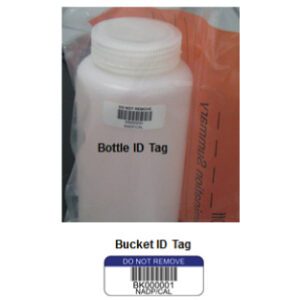
Shelves are closer to the picker and change more often. Choose smaller-format warehouse labels with crisp, human-readable text and codes that scan quickly at arm’s length. Removable options are great for seasonal shifts and split-bin systems. Where updates happen often, try printable inserts or label holders that protect the code but allow fast swaps.
Best practices:
- Keep placement consistent along the shelf edge so eyes and scanners land in the same spot.
- Use high-contrast backgrounds for low-light zones.
- Standardize font, character height, and data order to cut picking errors.
Floor Labels: Built for Impact, Traffic, and Cleaning
Floor markers live in the harshest zone. They endure forklifts, pallets, abrasion, moisture, and cleaners. Start with thick industrial films and pair them with aggressive adhesives that bond to sealed concrete. Add a protective laminate or cover plate in high-traffic paths. Position codes just outside travel lanes to reduce scuffing while keeping sight lines open for drivers.
Best practices:
- Degrease and dry the surface before installation.
- Use rounded corners to prevent edge lift.
- Protect with overlays where frequent turns or pallet drops occur.
Materials and Durability That Match Your Environment
Different materials determine how long warehouse labels stay readable. Polyester films resist abrasion, oils, and routine cleaning. Polypropylene and polyethylene add flexibility for bins or curved containers. Vinyl conforms to uneven surfaces. Paper’s cost-effective for short-life tasks like cross-dock and shipping.
Tie your selection to real conditions. Freezer aisles and docks need constructions that bond in the cold and resist brittleness. Humid facilities and washdown areas benefit from sealed faces and edge protection. Dusty environments call for smooth films that wipe clean and maintain contrast. When you weigh material cost against service life, durable constructions often reduce relabeling labor and keep barcode grades high.common.If labels fail, the costs show up immediately. Faded bars slow lines. Edge lift catches on cartons. Adhesives that cannot handle cold rooms fall off at the worst moments. Build durability into your plan and the issues vanish before they start. Thoughtfully placed warehouse labels are a daily productivity tool, not a maintenance chore.e burden.s, UV-curable inks offer a dependable solution that bridges the gap between quality and speed.
Ready to match labels to your rack, shelf, and floor environments with fewer experiments and less downtime? Talk with an EIM specialist about a quick sample plan and on-site trials that mirror your workflow.
Adhesive Label Types for Different Warehouse Surfaces
Surfaces vary widely across facilities, and adhesive selection needs to match them. Powder-coated uprights and painted beams can be slick, so high-tack acrylics are a smart choice. Bare metal accepts a range of adhesives, but long-term performance improves with formulas designed for metals. Low-surface-energy plastics like HDPE totes and polypropylene bins need specialized adhesives to prevent corner lift. Concrete floors demand industrial-strength adhesives and often a protective layer on top.
If you manage cold storage, choose adhesives that can be applied at lower temperatures and still cure to full strength. For temporary staging or cross-dock projects, removable options leave surfaces clean and ready for the next cycle. When it’s time to retire locations, blockout constructions with opaque backs prevent old codes from interfering with new scans.
Tip: If you’re not sure what coating or finish is on your racks or floors, EIM can test samples on your exact surfaces and recommend the right adhesive for your environment.
Color-Coding and Visibility in Busy Aisles
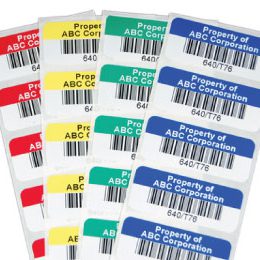
Color makes locations easier to find and reduces picking mistakes. Assign colors to aisle zones, product families, or storage levels, then carry those colors through rack labels, shelf labels, and overhead signs. Use high-contrast combinations so codes stay readable in low light or long aisles. Pair color with clear, human-readable text for fast visual confirmation, and keep label backgrounds light so scanners pick up bars cleanly.
In high-bay storage or bulk areas, long-distance scannable options like retro-reflective labels improve read rates from the ground or a lift truck. The best way to label warehouse racking at height usually combines larger symbol sizes, simplified data, and color blocks for quick orientation.
Warehouse Labeling Best Practices That Pay Off
A few habits make daily work easier and keep codes performing.
- Align with your WMS conventions. Match data order, check digits, and naming so staff can verify locations quickly.
- Standardize variable data printing. Maintain quiet zones, consistent fonts, and contrast across all warehouse labels.
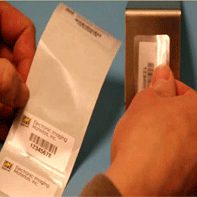
- Train and retrain. Surface prep and pressure affect adhesion. Refresh training when materials or printers change.
- Revalidate after changes. Any tweak to film, adhesive, ribbon, or print density should trigger a quick scan and durability check.
- Plan for relabeling. Use removable or insert solutions where SKUs change often, and keep a blockout strategy for retired locations.
Cold Storage Labels and Other Special Environments
Cold rooms and freezer aisles come with their own challenges. Choose cold-temperature acrylics that bond at low application temperatures and stay flexible. Allow for cure time before heavy handling. Keep label faces sealed and consider overlaminates that minimize moisture ingress and frost buildup. For damp docks or humid zones, prioritize films that resist swelling and adhesives that handle condensation. In areas with frequent washdowns, select constructions that hold up against cleaners and abrasion.
Test Before You Commit
Nothing replaces a pilot. Print a small run, apply labels in each target zone, and run your normal workflow for a week. Check scan times, look for edge lift, and see how well the labels clean up at the end of a shift. Confirm that operators can read human-readable lines and that scanners capture codes on the first pass. A short test will reveal issues before a full rollout and help you dial in the best construction for each area.
During your pilot, make sure the topic of warehouse labels stays front and center with your team. Encourage operators to note which labels perform best under real conditions and which need changes to material, size, or placement. These observations will help finalize warehouse labels that hold up over time and reduce relabeling work.
Match Labels to Use Case, Not Just Budget
The best choice balances cost, durability, and scan performance. Start with the application, confirm the surface, map the environment, and size the code for real scanning distances. When you approach selection this way, warehouse labels become a long-term asset that supports accurate picks, faster training, and reliable audits.
Work With EIM for a System That Performs
Electronic Imaging Materials builds warehouse labeling systems that fit your layout and workload. Our team helps you select the right constructions for racks, shelves, and floors, test them on your actual surfaces, and standardize print so your crew scans cleanly the first time. If you’d like to streamline location IDs, improve read rates, and cut relabeling, we’re ready to help you design a dependable plan.